Painting Older Toronto Homes: Part II — A Guide to Heritage Homes
What it really takes to paint a heritage-designated home in Toronto — the permits, the historically appropriate palettes, and the brick rule that tripped up two famous new owners.
July 5, 2026 · 7 min read
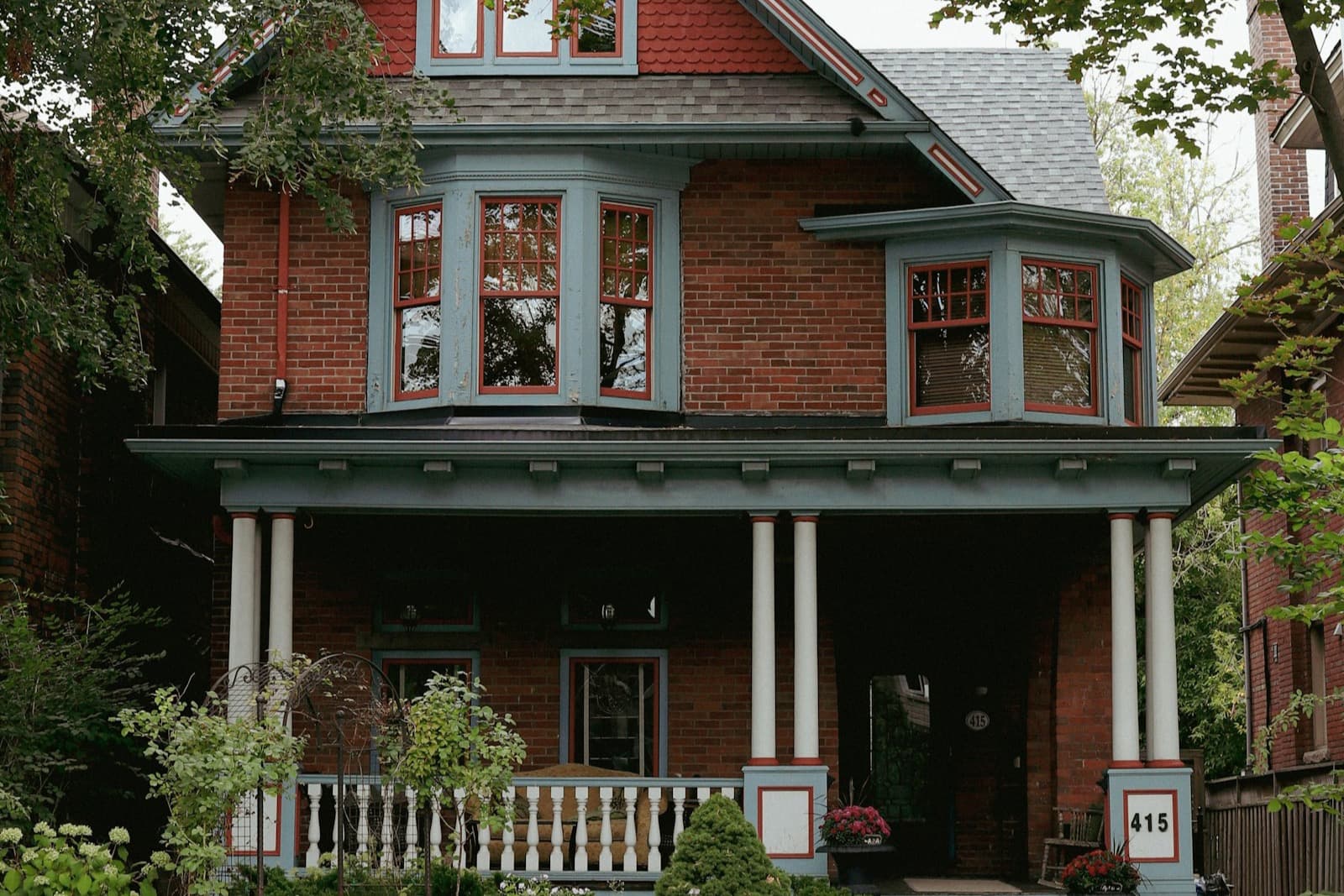
In this article, we continue our series about painting older Toronto area homes, with a focus on Heritage property designations.
Having your home designated as a Heritage property can have several advantages. It is official recognition that your home isn’t just old… it has genuine cultural or architectural significance. In turn this can give you a sense of stewardship in preserving something for your community and city. It also creates a legal barrier against demolition or significant alteration, relevant in the Toronto area where older housing stock regularly gets torn down for semis and condos. Protection can extend to your surrounding neighbourhood even if those homes aren’t designated as Heritage properties. With the character of your home, and even neighbourhood being protected, it can also give you price stability.
However, it can also lead to some restrictions that are important to understand.
Is Your Home Designated as a Heritage Property?
If your home was built before the 1950s, it’s a good idea to start with understanding if it is Heritage designated. Most older Toronto area homes aren’t — but some are, and if yours falls into that category, painting is not as simple as picking a colour at the hardware store. If you live in Toronto, you can check using the City Heritage Register to see if you’re listed or designated. There’s also a map you can browse. Being listed (but not designated) generally doesn’t restrict exterior painting, but it’s worth knowing your status before starting work.
What Are the Restrictions and Requirements?
Toronto has two main tiers of heritage protection under the Ontario Heritage Act:
- Part IV (Individually Designated):These are properties the City has formally designated as having significant cultural heritage value. If your home falls here, any exterior alteration — including painting masonry or changing exterior colours — requires a Heritage Permit from the City before work begins. The City’s Heritage Preservation Services reviews applications and can refuse changes that don’t align with a property’s documented heritage attributes. This isn’t bureaucratic nitpicking; ignoring it can lead to fines and, in some cases, void your insurance.
- Part V (Heritage Conservation Districts):Some entire neighbourhoods are protected, including areas in Cabbagetown, Rosedale, and Weston. Homes within these districts are subject to district-level guidelines that govern exterior appearance, even if the individual property isn’t separately designated.
On the upside, Toronto and Ontario have occasionally offered financial assistance programs for heritage property maintenance. It’s worth checking if any are currently active.
What Does Heritage-Compliant Exterior Painting Actually Look Like?
As Tessa Virtue and Morgan Rielly found out the hard way, these rules have real teeth. The Olympic gold medalist and her Maple Leafs husband bought a 1912 Edwardian home in North Rosedale in 2022 — then began applying white limewash to the brick exterior to address mismatched patches and discolouration. Heritage Planning staff spotted the work underway, ordered it stopped, and the couple spent months fighting for approval. City Council ultimately denied the permit. The red brick stayed. Read the full story →
If your home is individually designated or sits within an HCD, the restrictions mostly come down to three things: colour, material, and process.
On colour, the City doesn’t hand you a paint chip and say “pick one of these.” But Heritage guidelines do require that your colour choices are consistent with the property’s documented Heritage attributes — which in practice means historically appropriate palettes. Earth tones, muted greens, deep reds, and ochres were common on Victorian and Edwardian homes. Bright whites, greys, and modern accent colours can raise flags. If you’re unsure, your contractor should be pulling the Heritage Statement of Significance for your property before recommending anything.
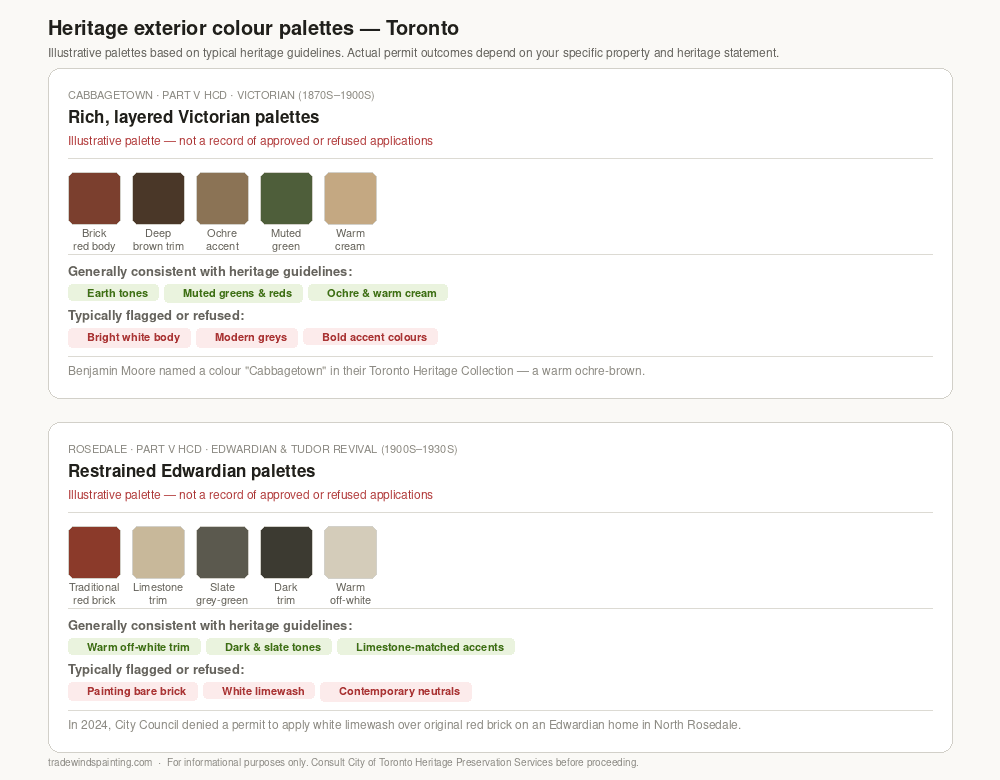
On material, the most common restriction is against painting previously unpainted masonry. Brick and stone on older homes were often left bare intentionally, and painting them is considered an irreversible alteration — the City takes this seriously. If your brick has never been painted, assume you need a permit before changing that.
The processis usually less intimidating than it sounds. Heritage Permit applications for exterior painting are generally straightforward if the proposed colours and scope are clearly documented. However, the timeline can run several weeks, so this isn’t something to sort out the week before you want work to start.
The good news is that none of this prevents you from refreshing your home’s exterior — it just requires a bit more lead time and a contractor who knows what they’re doing. If you’re not sure where to start, we’re happy to take a look and talk you through what’s involved.
Want a price on your own place?
Two minutes in the configurator. No walk-through, no phone tag, no “we’ll get back to you Tuesday.” Just a real Toronto number.